
From the Collection of Roger Guillemin
Nobel laureate, Salk Institute scientist and lifelong collector. A few pieces from Roger Guillemin's collection, and the story behind them.
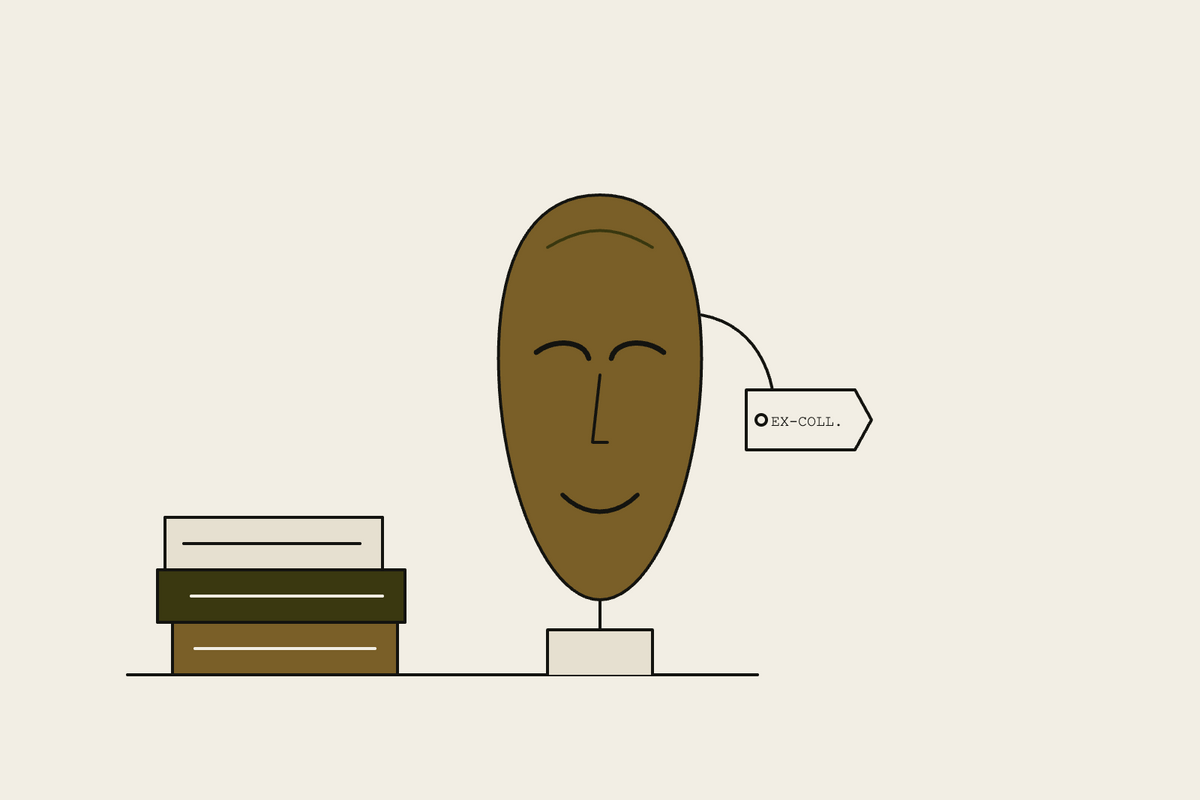
The short answerRoger Guillemin, who shared the 1977 Nobel Prize in Physiology or Medicine and spent decades at the Salk Institute in La Jolla, was also a serious collector. A few pieces from his collection are now at Nectar House, and each listing notes where it came from.
Some of the pieces in our shop come from the collection of Dr. Roger Guillemin, and they're among the ones we're proudest to have handled.
Guillemin was born in Dijon, France, in 1924. He came to the Salk Institute in La Jolla in 1970 to lead its new Laboratories for Neuroendocrinology, and in 1977 he shared the Nobel Prize in Physiology or Medicine for discoveries about the hormones the brain produces. He died in 2024, at 100.
Outside the lab he was a serious collector. He kept French and American paintings and sculpture, along with Papuan and pre-Columbian pottery, and a library that reached well beyond science.
What we have from his collection
A Dan passport talisman from the Ivory Coast or Liberia, carved around 1940 to 1960. Dan passport masks are small versions of full-size masks, made to be kept close and carried.
A two-volume set of Louis XVII by A. de Beauchesne, published in Paris in 1868, from his library.
Each listing notes where the piece came from, so the history travels with it. We'll add more here as we list them.
Why provenance matters
Provenance is the record of who owned a piece before you. A clear history makes a piece easier to understand and, often, easier to value, and for many collectors it's simply part of the pleasure of owning it. When we know where something came from, we say so in the listing, so that history stays with the piece.


