Article: Signed, Numbered or Printed: How to Read an Art Print
Signed, Numbered or Printed: How to Read an Art Print
The short answerA pencil signature in the margin means the artist signed that sheet by hand. A number like 123/260 is that sheet's place in a limited edition. Under a loupe, a regular pattern of tiny dots means an offset print made by machine, while a looser, uneven texture points to a hand-pulled lithograph.
Two prints can hang side by side, same image, same frame, and one is worth ten times the other. The difference is almost always in how it was made and who signed it. A few minutes with good light and a loupe will tell you most of what you need to know.
Signed in pencil, or signed in the plate
A pencil signature in the margin means the artist held that sheet and signed it by hand. A signature that's printed as part of the image, often called signed in the plate, was reproduced along with everything else. Tilt the paper toward the light. Pencil sits on the surface with a slight sheen, and you can often see where the point pressed into the paper.
Our Elton Bennett, The Tall Ship is pencil-signed by the artist. Our Beatles Abbey Road lithograph is a licensed edition from 1993 with no artist signature at all, and we say so in the listing.
The numbers in the corner
A number like 123/260 means this sheet is number 123 in an edition of 260. Smaller editions tend to be worth more than larger ones, all else being equal. Our Jeanine Kostia Blancheteau lithograph is 123 of 260, signed and dated 1963. The Abbey Road print, by comparison, is number 1089 of 9,800.
Lithograph or offset lithograph
This is where the loupe earns its keep. An offset lithograph is printed by machine, often from a photograph of an existing artwork, and under magnification it shows a regular pattern of tiny dots. A hand-pulled lithograph, drawn on stone or plate and printed in small numbers, shows a looser, less regular texture. The surface helps too: offset prints tend to look flat and even, while hand-printed work often has ink you can almost feel.
Our Wilhelm Heise, Blooming Spiraea is a stone lithograph from around 1925, signed by the artist.
Serigraphs
A serigraph, or screenprint, is made by pushing ink through a fine mesh screen, one color and one screen at a time. Look for flat, saturated areas of color with crisp edges where the layers meet. The Bennett is a serigraph, and you can see each color sitting on its own layer.
Original posters
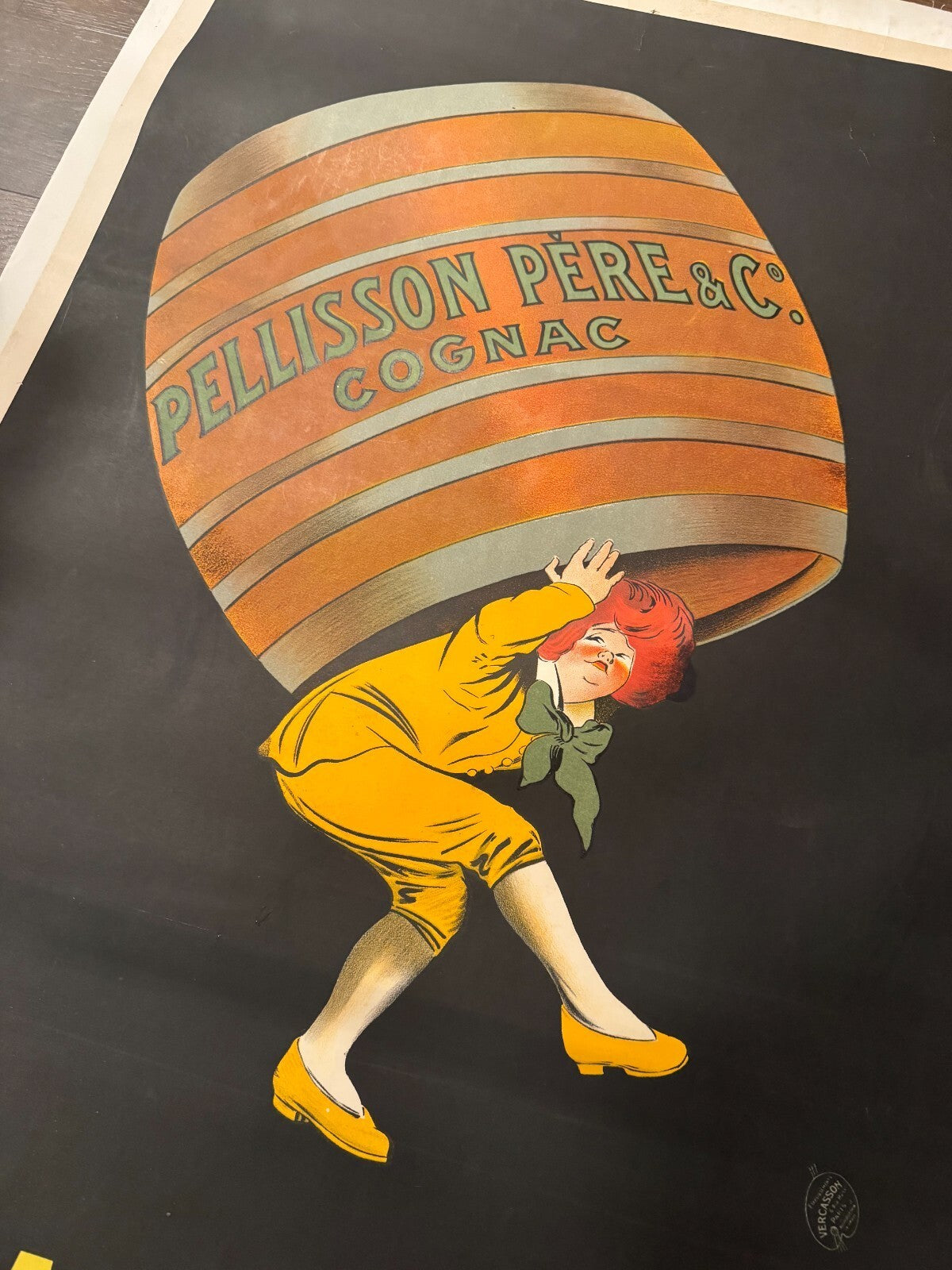
An original poster was printed to go up on a wall and sell something, not to be framed. That's part of the appeal. Our Cognac Pellisson poster by Leonetto Cappiello, the Italian-born artist who made his name designing posters in Paris, dates to around 1920. With posters, size and paper matter: reproductions are often smaller and printed on modern stock.
Every print we list says how it was made, whether and how it's signed, and its edition number when it has one. If we can't tell, the listing says that too. Browse everything in Art.
Questions we get
Is a print signed in the plate worth less than one signed in pencil?
Usually, yes. A plate signature was printed along with the image, so it doesn't show that the artist ever handled that sheet. A pencil signature does.
What does AP mean on a print?
AP stands for artist's proof, sometimes written E.A. in French. Proofs are a small number of impressions kept outside the numbered edition, and collectors often value them as much as numbered sheets, or more.
How do I tell an original poster from a reproduction?
Check the size, the paper and the printing. Reproductions are often smaller than the original, printed on bright modern paper, and show a regular dot pattern under magnification.